D
H
M
S
Offer
Provide additional details about the offer you're running
FLASHSALE

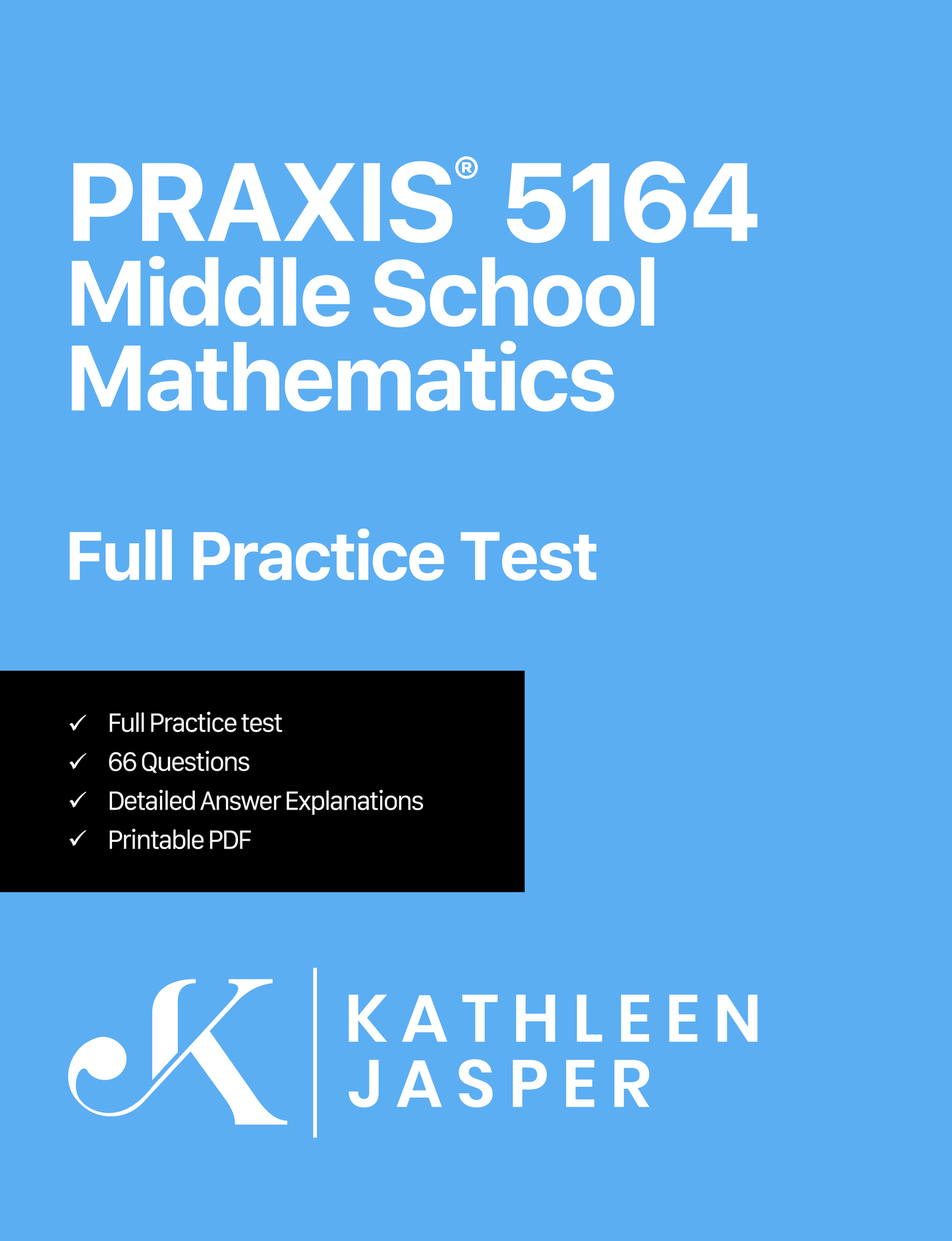
Prepare strategically for the Praxis 5164 Middle School Mathematics exam with a full-length practice test designed to mirror the structure, rigor, and question style of the actual exam.
This Praxis 5164 practice test is carefully crafted to reflect both the content categories and the scenario-based teacher questions you will encounter on test day. It helps you Think Like a Test Maker by recognizing how mathematical concepts are assessed and how student-thinking scenarios are framed.
If you want realistic practice before sitting for the exam, this is the tool that helps you measure readiness and sharpen strategy.
What’s Included
Each answer explanation goes beyond identifying the correct answer. It explains why the solution works, how to approach similar problems efficiently, and why the other answer choices are incorrect. This strengthens both mathematical reasoning and elimination skills.
The scenario questions specifically build your ability to:
This practice test allows you to:
Whether you use it as a diagnostic tool or as final exam prep, this Praxis 5164 practice test gives you focused, high-impact preparation.
How It’s Delivered
This practice test is delivered instantly to your email after purchase with download instructions. Check spam/promotions if needed. Download instantly and begin studying today.
Contact us if you have any questions: info@KathleenJasper.com. We have very helpful human customer support representatives available 24-7.
Prepare strategically for the Praxis 5164 Middle School Mathematics exam with a full-length practice test designed to mirror the structure, rigor, and question style of the actual exam.
This Praxis 5164 practice test is carefully crafted to reflect both the content categories and the scenario-based teacher questions you will encounter on test day. It helps you Think Like a Test Maker by recognizing how mathematical concepts are assessed and how student-thinking scenarios are framed.
If you want realistic practice before sitting for the exam, this is the tool that helps you measure readiness and sharpen strategy.
What’s Included
Each answer explanation goes beyond identifying the correct answer. It explains why the solution works, how to approach similar problems efficiently, and why the other answer choices are incorrect. This strengthens both mathematical reasoning and elimination skills.
The scenario questions specifically build your ability to:
This practice test allows you to:
Whether you use it as a diagnostic tool or as final exam prep, this Praxis 5164 practice test gives you focused, high-impact preparation.
How It’s Delivered
This practice test is delivered instantly to your email after purchase with download instructions. Check spam/promotions if needed. Download instantly and begin studying today.
Contact us if you have any questions: info@KathleenJasper.com. We have very helpful human customer support representatives available 24-7.


