D
H
M
S
Offer
Provide additional details about the offer you're running
FLASHSALE

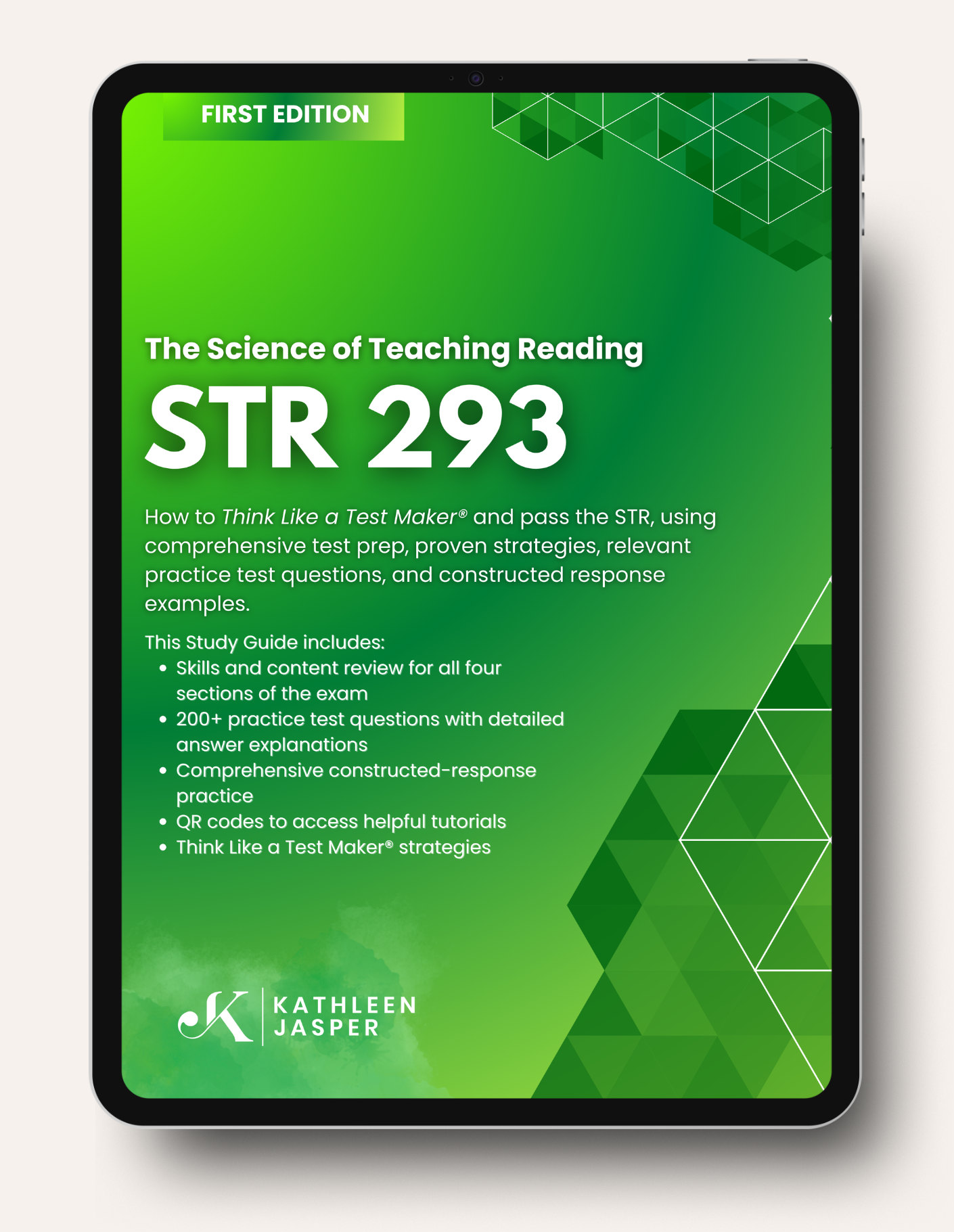
If you are preparing for the STR 293 Science of Teaching Reading exam, this digital study guide provides the focused content review and practice you need to pass with confidence.
This guide is fully aligned with the official STR 293 exam framework and is grounded in the science of reading, ensuring you are studying the most relevant, research-based instructional practices tested on the exam.
Content Areas Covered
This study guide follows the structure of the STR 293 exam and includes all four sections:
Each section provides clear explanations of key concepts along with targeted practice to reinforce your understanding.
What’s Included
Each explanation shows not only why the correct answer is right, but also why the other options are incorrect, helping you build strong test-taking skills and avoid common mistakes.
How It’s Delivered
This digital study guide is delivered instantly to your email after purchase with download instructions. Check spam/promotions if needed. Download instantly and begin studying today.
Contact us if you have any questions: info@KathleenJasper.com. We have very helpful human customer support representatives available 24-7.
If you are preparing for the STR 293 Science of Teaching Reading exam, this digital study guide provides the focused content review and practice you need to pass with confidence.
This guide is fully aligned with the official STR 293 exam framework and is grounded in the science of reading, ensuring you are studying the most relevant, research-based instructional practices tested on the exam.
Content Areas Covered
This study guide follows the structure of the STR 293 exam and includes all four sections:
Each section provides clear explanations of key concepts along with targeted practice to reinforce your understanding.
What’s Included
Each explanation shows not only why the correct answer is right, but also why the other options are incorrect, helping you build strong test-taking skills and avoid common mistakes.
How It’s Delivered
This digital study guide is delivered instantly to your email after purchase with download instructions. Check spam/promotions if needed. Download instantly and begin studying today.
Contact us if you have any questions: info@KathleenJasper.com. We have very helpful human customer support representatives available 24-7.


