

D
H
M
S
Offer
Provide additional details about the offer you're running
FLASHSALE
In this blog post, we’ll explore how to successfully navigate the child development and learning section of the Praxis Early Childhood Education exams 5533 and 5534. This content area is foundational to your success, and understanding how to approach questions about typical and atypical development can make a major difference in your score.
One of the most important things to remember is that young children develop at very different rates. In any early childhood classroom, you’ll see a wide range of abilities—some students may be just beginning to communicate, while others are already speaking in full sentences or even reading. The exam expects you to recognize this variability and respond thoughtfully, not react impulsively.
A common mistake test-takers make is jumping to conclusions too quickly. If a child is struggling, your first instinct on the exam should not be to refer them for special education services. Instead, the correct approach is usually to observe, document, and support. The Praxis emphasizes developmentally appropriate practices, which means giving students time, providing scaffolds, and collecting data before making any formal decisions.
Another key theme is avoiding extreme or premature actions. Answer choices that suggest immediate evaluations, drastic changes, or lowering expectations are often incorrect. Instead, look for responses that include ongoing observation, structured support, and collaboration with families. These reflect best practices in early childhood education and align with what the test is designed to measure.
Language and culture also play a critical role in this section of the exam. Many scenarios will involve multilingual learners, and it’s essential to support both their home language and their English development. Encouraging bilingualism, incorporating the home language into learning, and communicating with families in a culturally responsive way are all strong, appropriate responses. On the other hand, any suggestion of “English-only” instruction is typically a red flag.

To improve your test-taking strategy, start thinking like the test maker. Instead of reading the question first, try analyzing the answer choices. Often, you can eliminate incorrect options right away by spotting language that feels too harsh, too limiting, or not aligned with developmentally appropriate practices. This approach can help you narrow down your choices quickly and confidently.
In the end, success on this section comes down to understanding a few core principles: observe before acting, support rather than label, maintain high expectations, and respect each child’s developmental path. If you keep these ideas in mind, you’ll not only perform well on the exam but also strengthen your skills as an effective early childhood educator.
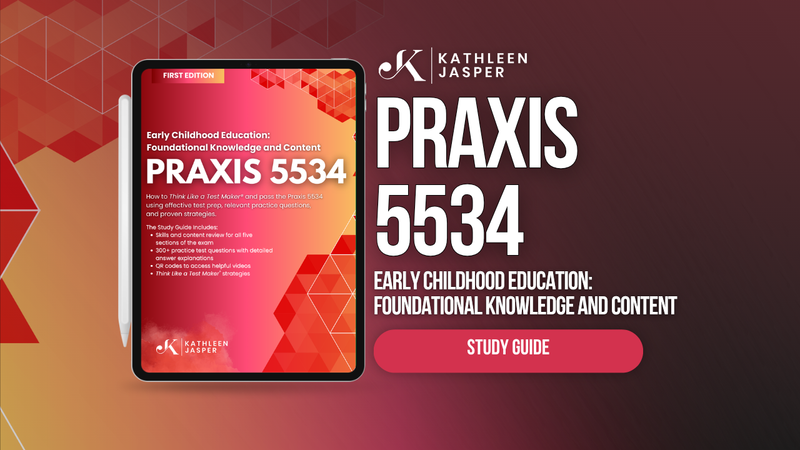
Pass the Praxis 5534 with confidence using a comprehensive digital study guide designed to help you think like a test maker and master every exam domain.
Aligned with the official test blueprint, it includes structured review, targeted practice, and 300+ questions with detailed explanations to build your content knowledge and test-taking strategy.
👉 Get the study guide here: Praxis 5534 Digital Study Guide
Preparing for your exam?
Study guides, online courses and free practice tests written to help you think like a test maker.


